
Learn More - Videos and Podcasts
Reshap-ED
Created by the Sydney Local Health District and the Institute for Musculoskeletal Health
Featuring A/Prof Gustavo Machado
14 July 2026
-
Winner of the Health Research and Innovation category for the 2026 Sydney Excellence Awards
RESHAP-ED evaluated a physiotherapist-led model of care for patients presenting to emergency departments with musculoskeletal conditions across five NSW hospitals. The trial demonstrated that workforce redesign can improve emergency department efficiency and patient experience while maintaining safety, clinical outcomes and cost-effectiveness.
Randomised Trial of a Virtual Fracture Clinic Pathway for Patients with Simple Fractures (RECITAL)
Created by the Sydney Local Health District and the Institute for Musculoskeletal Health
Featuring Min Jiat Teng
17 July 2026
-
RECITAL was the first international randomised controlled trial to evaluate a virtual fracture clinic pathway for patients with simple fractures. The study demonstrated that physiotherapist-led virtual care achieved comparable clinical outcomes to traditional in-person fracture clinics, while improving patient experience and supporting more sustainable, scalable models of care.
RECITAL was a Highly Commended finalist in the Health Research and Innovation category at the 2026 Sydney Excellence Awards.
BreastScreen Invitation Explanation for women over 74 years of age in Australia
Created by the Sydney Health Literacy Lab
5 Jun 2023
-
Women in Australia are invited to the national breast cancer screening program (BreastScreen) from age 50-74 years. This video explains why invitations stop at 74 years, with brief information and next steps to support women’s decision making beyond 74 years.
60 Minutes Australia - Help That Harms
Approved medical devices that have caused life-threatening harm to patients.
Featuring Prof Chris Maher
19 July 2026
-
60 Minutes Australia - Season 15
S2026Ep 22 Help That Harms
Why thousands of Australians are at risk from dubious medical devices and implants.
Watch it it in full here: https://www.youtube.com/watch?v=B0HnJHTz2yA
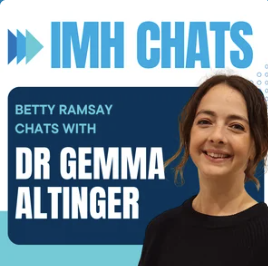
IMH Chats: Can a nudge change healthcare?
Featuring Dr Gemma Altinger
24 June 2026
-
What influences the decisions we make in healthcare?
In this episode of IMH Chats, Betty Ramsay sits down with Dr Gemma Altinger to explore how behavioural science can help improve healthcare decisions. Gemma shares her unique journey from working in government health policy and international cancer research to completing her PhD at the Institute for Musculoskeletal Health.
Together, they discuss the NUDG- ED Trial, a large study investigating whether behavioural "nudges" could reduce unnecessary imaging and opioid prescribing for back pain in emergency departments. They unpack the surprising findings, the challenges of changing clinical behaviour, and what the future holds for patient-centred healthcare.
Too Much Medicine in Low and Middle Income Countries (LMIC)
A short video by the Institute for Evidence-Based Healthcare, Bond University
Featuring A/Prof Loai Albarqouni
30 September 2024
-
Low- and middle-income countries struggle to provide health care to some, while others get too much medicine.
In this video, we delve into the research led by A/Prof Loai Albarqouni, which addresses the stark disparities in healthcare provision in low- and middle-income countries.
With a global team of over 50 researchers, Dr Albarqouni led three systematic scoping reviews, analysing the evidence from more than 650 scientific articles involving close to 15 million participants or healthcare services in LMICs.
The findings highlight the challenges of underuse and overuse, offering crucial insights into improving healthcare equity worldwide.
More content from the Institute for Evidence-Based Healthcare
ABC Health Report: Finding out breast density can cause anxiety, confusion.
Featuring Dr Brooke Nickel
24 January 2026
-
In some places in Australia, women are notified of how dense their breasts are after they’ve undergone their routine mammogram.
Dense breasts can be a risk factor for cancer, and can also make it harder to detect.
But notifying women can cause anxiety and confusion, not only because of the risks, but because of the out-of-pocket costs that follow.
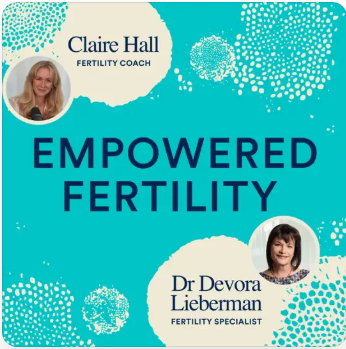
Empowered Fertility Podcast: Decisions, data, and deep feelings: Making tough calls in IVF
Featuring Dr Tessa Copp
15 November 2025
-
In this new Apple Podcast, Empowered Fertility, Dr Tessa Copp is featured and provides information about navigating fertility treatment choices.
ABC The Philosopher’s Zone: What beauty apps are doing to us
Featuring Dr Yves Saint James Aquino
26 September 2025
-
Beauty apps are becoming more and more miraculously high-tech, but also more and more invasive. You might feel OK about an app that gives your face a "beauty rating", but what if the app started to recommend cosmetic surgery procedures? Or how about a selfie enhancement app that doesn't just get rid of minor skin blemishes, but actually alters the shape of your face to suit and algorithmically determined ideal?
Guest:Yves Saint James Aquino, philosopher and bioethicist at the University of Wollongong
ABC Life Matters: Are full body health scans worth it?
Featuring Dr Sean Docking
3 July 2025
-
Chris Hemsworth and Kim Kardashian are among the celebrities promoting a pricey medical procedure called a Whole Body MRI.
While the scan can diagnose conditions like tumours and injuries in one session, the medical community has concerns.
Is it worthwhile?
Guests:
Rebecca Keen, a Whole Body MRI detected her brain aneurysm
Dr Sean Docking, health economist, Monash University
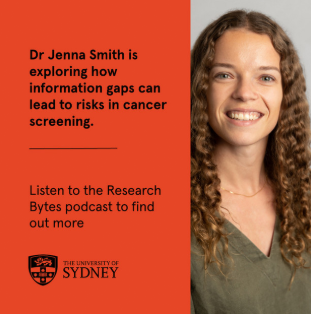
Research Bytes Podcast: Dr Jenna Smith exploring how information gaps can lead to risks in cancer screening
Featuring Dr Jenna Smith
29 May 2025
-
Dr Jenna Smith explores the communication older people receive around cancer screening and how it shapes their decisions. Her research reveals a key information gap for older women approaching the upper age limit for screening, and the emotional and practical consequences that follow.
ABC Health Report: Should we be worried about for-profit radiology?
Featuring Dr Sean Docking
14 June 2025
-
A national audit of radiology practices has revealed that many private practices are owned by large for-profit corporations and that four corporations own more than half of all MRI providing clinics.
There are concerns growing around corporate interest and the future of affordable, high-quality care in Australia.
ABC Health Report: Scanxiety - Could scans in cancer remission do more harm than good?
Featuring Prof Katy Bell
31 May 2025
-
People who are in remission from cancer have regular scans and tests as part of surveillance.
But is surveillance overdone and does it make a difference to outcomes?
Shirtloads of Science Podcast: Health Misinformation on Social Media & Overdiagnosis
With Dr Brooke Nickel
19th May 2025
-
Brooke dives into the murky world of health misinformation on social media, exposing how overdiagnosis and unverified health claims are thriving in this mostly unregulated space. The influence of online personalities, the power of personal anecdotes, and the urgent need for evidence-based guidance in digital health conversations is discussed.
ABC The World Today: The ‘unhealthy’ obsession with morning routine videos
Featuring Dr Brooke Nickel
28th March 2025
-
The 'unhealthy' obsession with morning routine videos has sparked concern from health professionals.
Featured in this episode:
Dr Andrew Hughes, marketing expert ANU
Dr Brooke Nickel, University of Sydney
Dr Toby Garder, GP
ABC Health Report: Influencers spreading misinformation online
Featuring Dr Brooke Nickel
1 March 2025
-
Since Belle Gibson was exposed in 2015 for the misinformation she spread on social media, platforms like Instagram have only grown, and gained further influence.
A new study has looked into posts full of misleading health information.
ABC Life Matters: Apple cider vinegar to wellness conspiracies - how can we combat health misinformation?
Featuring Dr Brooke Nickel
17 February 2025
-
Netflix's new show Apple Cider Vinegar has reignited interest in wellness scammer Belle Gibson.
A decade on, this podcase will explore where we are with health misinformation online, and if anything that can be done to better regulate health claims made on social media.
Guests:
Bella Johnston, cancer survivor
Dr Brooke Nickel, Senior research fellow with Sydney University's School of Public Health
Dr Anna Halafoff, Deakin University Associate Professor of Sociology and coordinator of the Spirituality and Wellbeing Research Network
ABC Ladies We Need to Talk: Is egg freezing all it’s cracked up to be?
Featuring Dr Tessa Copp
19 November 2024
-
Egg freezing is sold as a way for women to hack their fertility and buy some more time on the biological clock. Fertility companies are marketing the procedure as an insurance policy, but some experts argue it's better thought of as a lottery.
Rates of egg freezing have almost doubled in recent years but the number of people coming back to use those eggs are staggeringly low and even then, there's no guarantee of a baby. Then there's the cost, between $5000-$10,000 per cycle.
Alongside egg freezing, the AMH test, or egg timer test, is also being promoted as a way for women to take control of their fertility but the only way to know if you're fertile is to try and get pregnant.
This episode sorts the science from the sell around egg freezing and fertility tests.
Medicine and Science from the BMJ: Extending access for breast cancer, and epidural outcomes
Featuring Prof Katy Bell and Prof Stacy Carter
01 July 2024
-
New U.S. guideline on breast cancer screening have been extended to women in their 40s - Katy Bell, from the University of Sydney, and Stacy Carter, from the University of Wollongong explain why the good intention of that change wont be mirrored in outcomes - and may even induce harm.
ABC Health Report: What women need to know about the ‘egg timer’ test
Featuring Dr Tessa Copp
03 August 2024
-
Heard of the anti-Mullerian hormone, or the 'egg timer' test?
It's marketed strongly to women in their 30s but a new study suggests some of the claims around it can be misleading.
And when given more information about the test, many women decide against it.

E3 Rehab Podcast: High vs Low Value Care
Featuring Dr Josh Zadro
21 May 2024
-
Chris Hughen sat down with Josh Zadro to talk about High vs Low Value Care in musculoskeletal rehab and medicine.
We dive into a variety of topics including high and low value care in the context of imaging, injections, surgery, and physical therapy.
Helpful papers:
Prevention Works Podcast: Trust in health literacy and co-design communication
Featuring A/Prof Carissa Bonner and Dr Melody Taba
23 May 2024
-
In this podcast Carissa and Melody share how health literacy is key in combatting misinformation and discuss best practice approaches to social media health communication to diverse communities.
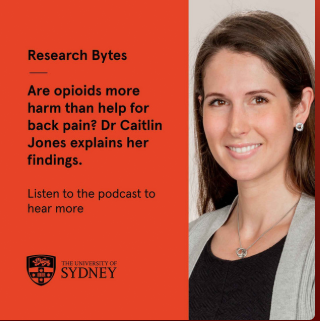
Research Bytes Podcast: Dr Caitlin Jones on opioids for back pain
Featuring Dr Caitlin Jones
4 March 2024
-
Dr Caitlin Jones aimed to investigate the efficacy and safety of opioids for low back pain, and uncovered some interesting findings in her research. Listen to find out more, you can read her paper here: Opioid analgesia for acute low back pain and neck pain (the OPAL trial): a randomised placebo-controlled trial.
ABC Four Corners: Pain Factory
Featuring A/Prof Adrian Traeger, Prof Ian Harris and Prof Chris Maher
April 2024
-
More than three million Australians are living with chronic pain, and it's become a breeding ground for exploitation. We expose the ugly side of medicine with patients in worse pain after having surgery and lives put at risk.
ABC The Philosopher’s Zone: The pathology of ugliness
Featuring Dr Yves Saint James Aquino
8 Sept 2023
-
There are plenty of our facial and bodily features that we don't necessarily like - but does this make them aberrations requiring medical intervention? As the cosmetic surgery industry goes from strength to strength, the answer increasingly appears to be Yes. This week we discuss the elevation of beauty to a moral imperative, and the corresponding pathologisation of physical traits deemed to be ugly.
Guest:Yves Saint James Aquino, Postdoctoral Research Fellow in the Australian Centre for Health Engagement, Evidence and Values, University of Wollongong
Read Yves paper, Pathologizing Ugliness: A Conceptual Analysis of the Naturalist and Normativist Claims in “Aesthetic Pathology” here.
ABC Health Report: What’s an ‘incidentaloma’?
Featuring Dr Ian Scott
22 January 2024
-
It's the term used to describe all kinds of chance, accidental findings that turn up on scans. They might be useful and informative—but not always because any intervention to follow them up may cause additional harm. So, if that happens, how best to proceed?
First, Do No Harm: The Perils of Too Much Medicine and How We Can Tackle It
Wiser Healthcare Public Event, 11 October 2021
-
Wiser Healthcare presents this powerful livestreamed discussion with globally respected doctors on the perils of too much medicine.
Wiser Healthcare’s Dr Ray Moynihan, from Bond University, moderated conversations with Professors Rachelle Buchbinder and Ian Harris, speaking on their explosive new book “Hippocrasy: how doctors are betraying their oath” and with Dr Ranjana Srivastava – author, oncologist and well-known Guardian columnist. Jan Donovan from the Consumers’ Health Forum of Australia then joined the group for a panel discussion and live question and answer session with the audience.
MODERATOR
Dr Ray Moynihan, Wiser Healthcare (Bond University)
IN CONVERSATION WITH
Prof Rachelle Buchbinder – rheumatologist and researcher (Monash Uni)
Prof Ian Harris – orthopaedic surgeon and researcher (UNSW)
Dr Ranjana Srivastava – oncologist, author and Guardian columnist
Jan Donovan – Consumers’ Health Forum of Australia, Board member
Learning from the pandemic: Can COVID-19 help us build a better healthcare system?
Preventing Overdiagnosis Conference Webinar, 17 November 2020
-
The Asia-Pacific, and final, PODC webinar for 2020 was hosted by PODC partner Wiser Healthcare. This webinar focused on system impacts of COVID-19 and potential future implications for the healthcare system, addressing these questions:
How has healthcare service utilisation changed during the COVID-19 pandemic, and what has this revealed about effective and ineffective care?
Have these changes made things better or worse for patients, publics, healthcare workers, and healthcare systems?
Can COVID-19 disruption help healthcare build back better: with less low value care, more needed care, and minimal under- and overdiagnosis?
The event was chaired by senior Wiser Healthcare investigator Prof Paul Glasziou, who welcomed two speakers followed by a moderated Q&A panel discussion. Note the content had an Australian-lens but global data is presented, and inferences for global systems can be made.
SPEAKERS
Prof Anne Duggan, Australian Commission on Safety and Quality in Healthcare
A/Prof Ray Moynihan, Bond University
PANELLISTS
Kim Sutherland, Agency for Clinical Innovation NSW
Dr Megan Keaney, Australian Department of Health
Leah Hardiman, Health Consumer
Prof Jenny Doust, GP/University of Queensland
A/Prof Katy Bell, University of Sydney
RELEVANT LINKS
Systematic Review pre-print referenced in A/Prof Moynihan’s presentation – Pandemic impacts on healthcare utilisation: a systematic review
Systematic Review companion piece in The Conversation – COVID-19 slashed health-care use by more than one-third across the globe. But the news isn’t all bad
Australian National Cervical Screening – Panel Discussion
The University of Sydney, March 2019
-
Evidence review for the renewal of the National Cervical Screening Program.
Click here to download the panel powerpoint slides.
For further information, or if you have any questions, please contact Dr Rachael Dodd
Treatment overload: Lifting the burden of too much healthcare
Partnership Centre for Health System Sustainability, November 2019
-
Interview with PCHSS’ Professor Paul Glasziou about low-value healthcare and ways to reduce the burden on our health system.
Prof Stephen Walter – Prostate Cancer Screening
The University of Sydney, August 2018
-
Prof Stephen Walter takes us through methods for estimating the benefits and harms of prostate cancer screening.
From STEP to Wiser Healthcare seminar
The University of Sydney, November 2016
Jamie E’s back pain story
painHEALTH, October 2016
-
Watch Jamie share his experience with back pain and hear how he found a way through and back to a fully active, engaged and meaningful life.
Back pain – separating fact from fiction
Pain-Ed, September 2015
-
Prof Peter O’Sullivan discusses some of the myths about back pain which are widely held and negatively impact on the perception and treatment of back pain.
The Recommended Dose with Ray Moynihan
Cochrane Australia
Hosted by acclaimed journalist and health researcher Dr Ray Moynihan, The Recommended Dose tackles the big questions in health and explores the insights, evidence and ideas of extraordinary researchers, thinkers, writers and health professionals from around the globe. Produced by Cochrane Australia and co-published with the BMJ.
Is the health sector key to a low-carbon world?
Co presented with the Planetary Health Platform and Wiser Healthcare
The University of Sydney, May 2018
In this Sydney Ideas talk, Dr David Pencheon and the panel discussed how the Australian healthcare system is one of the leading contributors to climate change, how big data-sets can be used for quantifying supply-chain impacts of healthcare, and explore how the health and care sectors can work together to drive large-scale transformational change by addressing environmental, social and economic sustainability in a holistic manner.
Precision medicine: can it live up to the hype?
A Sydney Ideas event, co-presented by Wiser Healthcare, the Australian Epidemiological Association & the Australian Prevention Partnership Centre.
The University of Sydney, October 2019
The promise of precision medicine is that it could offer better health outcomes by targeting patients’ genetic and biochemical make-up to pinpoint, predict, prevent and treat diseases. Can it deliver on this?
Hear world-renowned thinkers explore some of the key issues around precision medicine in this Sydney Ideas Talk. They analyse the realities of disease prediction, economics, ethics, clinical applications and the balance between the personal and the public benefit.
Featuring:
– Professor Sandro Galea, Boston University
– Professor Sarah Wordsworth, University of Oxford
– Professor Christopher Semsarian, University of Sydney
– Associate Professor Ainsley Newson, University of Sydney
– (Chair) Professor Robyn Ward, University of Sydney
Is Too Much Testing and Treatment Making Us Sick?
The University of Sydney, May 2016
We all want to be able to get good healthcare when we need it. But what would it mean to provide and consume healthcare wisely? This panel discussion on Sydney Ideas Talk with Dr Iona Heath considers a radical idea: that sometimes wiser healthcare means less healthcare. Or at least, less healthcare for people who don’t need it, so we can give more healthcare to people who do.